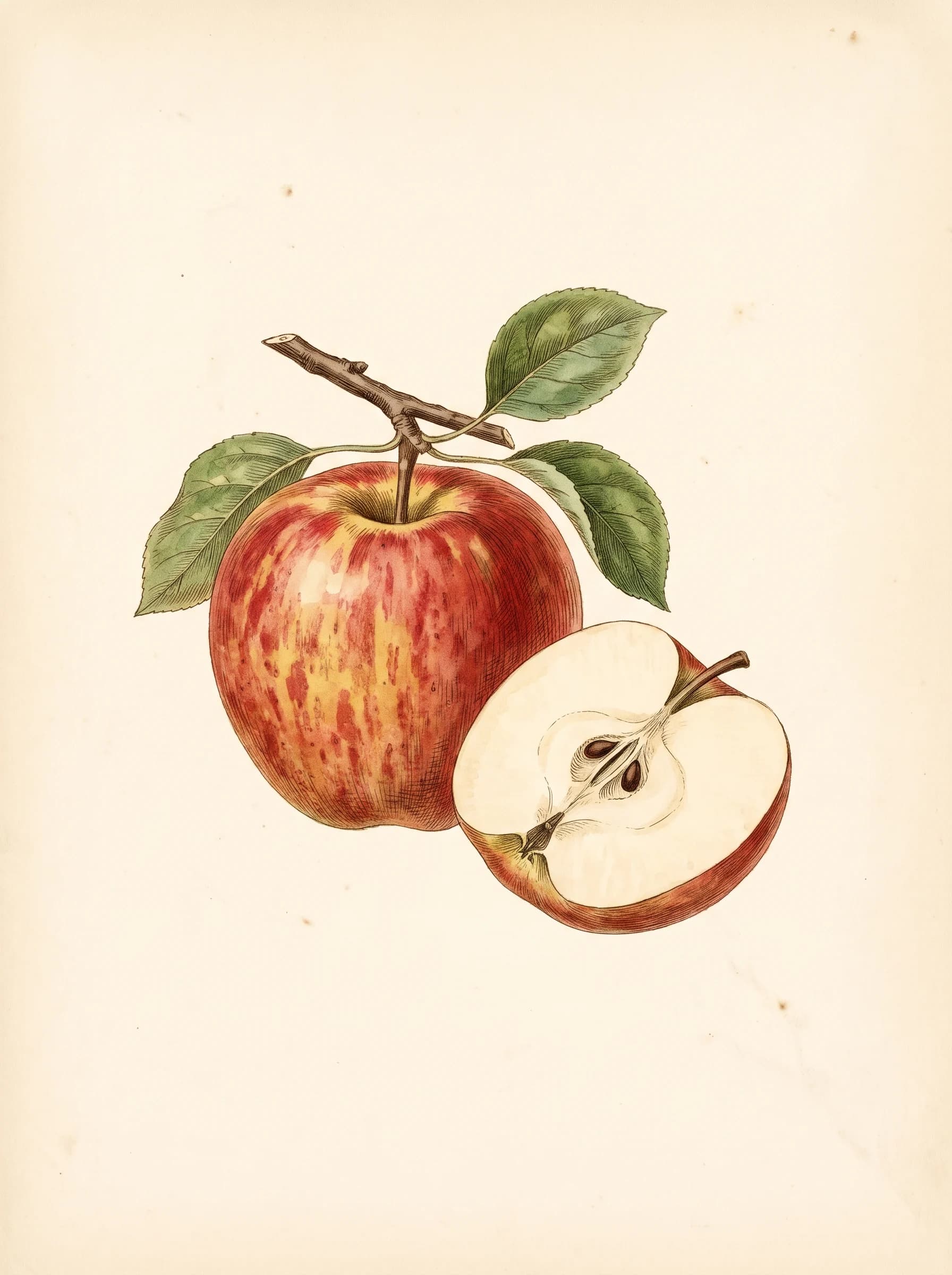
Fruits · apple
Honeycrisp
Explosively crisp and juicy, well-balanced sweet-tart, in the University of Minnesota’s description.
2 of 5 from sweet (1) to very tart (5). Rated from the New York Apple Association’s description, “honey sweet (with a touch of tart),” and the University of Minnesota’s “well-balanced: sweet-tart.”
- Origin
- University of Minnesota apple breeding program. Breeding records indicate the cross was made around 1960; it was selected as MN1711 in 1974 and released in 1991 (Howard et al., 2017; University of Minnesota). It was first billed as Macoun × Honeygold. DNA work identified Keepsake as one parent and an unreleased selection, MN1627, as the other, with Duchess of Oldenburg and Golden Delicious as grandparents through MN1627.
- Season
- Minnesota: September 15 to October 5 in east central Minnesota, in one passage of the University of Minnesota’s variety page, and approximately September 20 to October 5, beginning about a week after McIntosh, in another passage of the same page.
- In the oven
- Very juicy and coarse-celled. The University of Minnesota lists its culinary uses as fresh eating, cooking and salad, and describes large cells that “explode with juice.” The New York Apple Association rates it good for sauces, baking and pies. No test-kitchen account of its texture after baking has been found.
Honeycrisp is a University of Minnesota apple released in 1991 and named Minnesota’s state fruit in 2006. Its very crisp, juicy texture made it a premium apple; the university says millions of trees have been sold. Its true parentage was established only in 2017.
Honeycrisp was released in 1991 as the offspring of Macoun and Honeygold, but researchers soon found neither was a parent. The University of Minnesota traces the error to record keeping in the 1970s. In 2017 the graduate student Nicholas Howard and colleagues identified Keepsake as one parent and the unreleased selection MN1627 as the other, which made Duchess of Oldenburg and Golden Delicious its grandparents. Keepsake itself, the university records, descends from Northern Spy.
The tree is hardy to USDA Zone 4 and prefers cool climates; the University of Minnesota names McIntosh regions as good sites. The fruit is 60 to 90 percent dappled red over yellow in cool climates, stores about seven months in common storage, and is prone to bitter pit and soft scald. Minnesota named it the state fruit in 2006. The university credits it with reviving small and mid-sized family orchards, because it sold at a premium.
The New York Apple Association rates Honeycrisp good for sauces, baking and pies, and the University of Minnesota lists cooking among its uses. Neither source describes how its slices behave in a baked pie, and no published test of that has been found.
Sources
- Honeycrisp, Minnesota Hardy, University of Minnesota
- Nicholas Howard Uncovers the Honeycrisp Family Tree, University of Minnesota Department of Horticultural Science (2017)
- Elucidation of the ‘Honeycrisp’ pedigree through haplotype analysis (Howard et al., Horticulture Research, 2017), PubMed Central
- Honeycrisp, New York Apple Association