Fruits · apple
Jonathan
Tart and juicy, in the University of Missouri Extension’s description.
4 of 5 from sweet (1) to very tart (5). Rated from the University of Missouri Extension’s description, “a tart, juicy, medium-sized red apple,” and Beach’s “sprightly subacid.”
- Origin
- The farm of Philip Rick, Woodstock, Ulster County, New York. It was first described in 1826 by Judge Jesse Buel of Albany, who named it for Jonathan Hasbrouck, the man who brought it to his attention (Beach, 1905; University of Missouri Extension). Beach notes the original tree was still alive in 1845, according to Downing. The University of Missouri Extension says it is believed to be an open-pollinated seedling of Esopus Spitzenberg; Buel listed it in 1826 as “Esopus Spitzenberg (New)” and in 1829 called it “an Esopus Seedling.”
- Season
- Missouri: late August to early September (University of Missouri Extension). New York: in season from November to January or later, from storage (Beach, 1905).
- In the oven
- A strong pie performer in testing. A 1961 study in the Journal of the American Pomological Society named Jonathan and Stayman Winesap the top varieties overall, because they rated high in pies made from either fresh or frozen slices. Beach (1905) described the flesh as firm, crisp, juicy and very aromatic. No test-kitchen account of whether its slices hold their shape has been found.
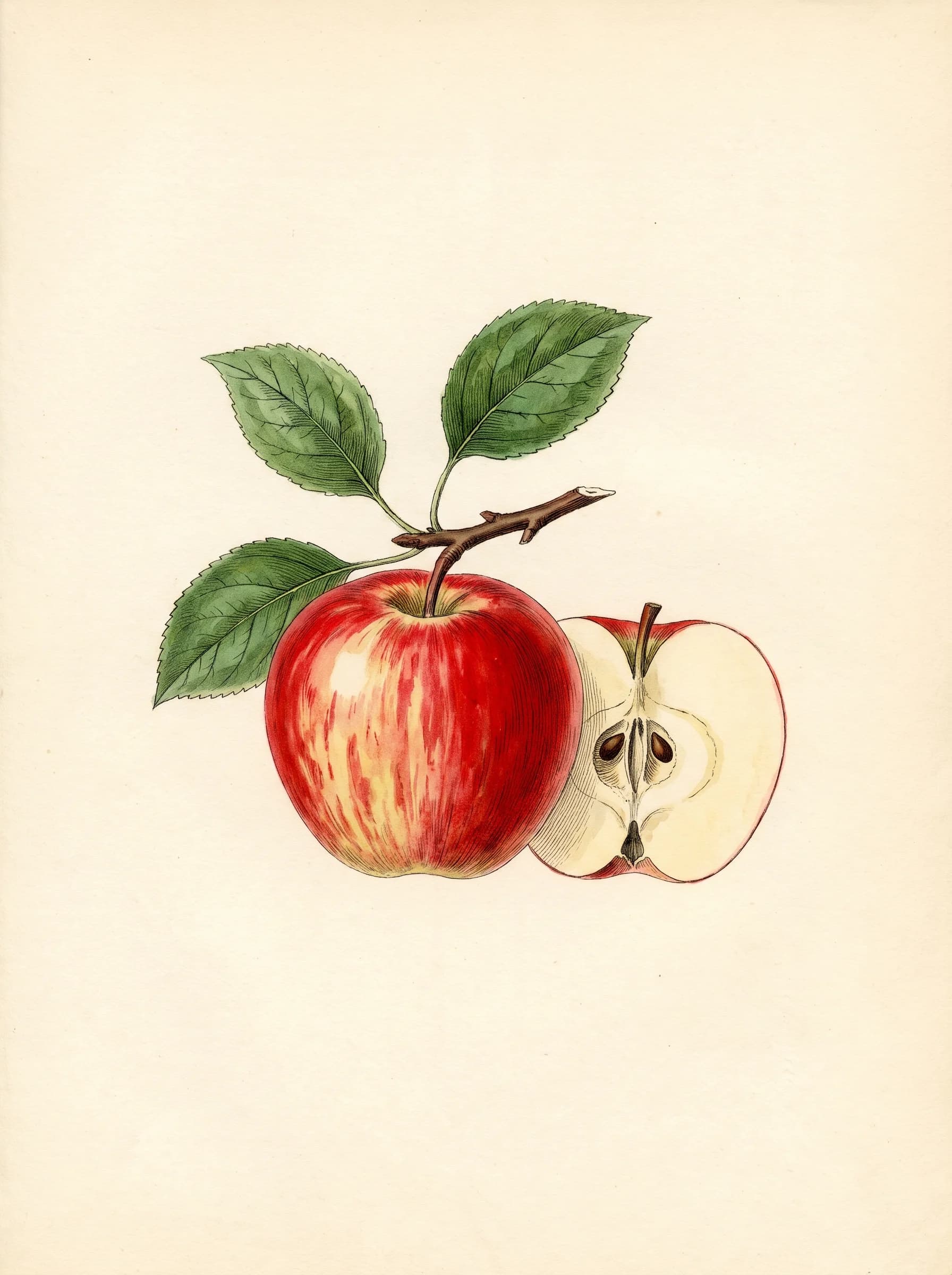
Jonathan is a small-to-medium red apple from Ulster County, New York, first described in 1826. It became a leading commercial apple of the Midwest and the Mississippi valley. It is tart, aromatic and short-keeping, and in a 1961 study it made some of the best frozen apple pies.
Judge Jesse Buel of Albany published the first account of the apple in 1826, in a descriptive catalogue for the New York Horticultural Society, and assigned it the name Jonathan in honor of Jonathan Hasbrouck. It had first circulated under other names, including Esopus Spitzenberg (New), Ulster Seedling and New Spitzenberg. The University of Missouri Extension reports that by the mid-nineteenth century it was one of the most commonly produced apples in the eastern United States.
Beach found that in New York the Jonathan grew rather small and was best suited to the fancy holiday trade, while in the Ohio, Mississippi and Missouri valleys and the irrigated West it grew larger and ranked next to Ben Davis in some localities. The tree is a moderate grower and was often top-worked onto Northern Spy, Baldwin or Rhode Island Greening. Stark Bro’s of Louisiana, Missouri, promoted it in its 1896 catalog as the “Queen’s Favorite,” according to the University of Missouri Extension. It has been a breeding parent of many later apples.
The 1961 frozen-pie study is the strongest published record of its use in pie: Jonathan rated among the best for pies made from fresh fruit and for pies made from frozen slices. Illinois Extension lists it among the varieties well suited to freezing, and notes that sugar-packed and dry-packed frozen apples can be used for pie. The University of Missouri Extension advises eating the fresh fruit before December, even when refrigerated.
Sources
- The Apples of New York, vol. 1 (S. A. Beach, New York Agricultural Experiment Station, 1905), Internet Archive
- Heirloom apples are ripe for the picking, University of Missouri Extension (2021)
- Varietal Differences in Frozen Apple Pies, Journal of the American Pomological Society (Fruit Varieties) 15(4) (1961)
- No matter how you slice them, apples are a fall favorite, University of Illinois Extension