Fruits · squash
Pumpkin
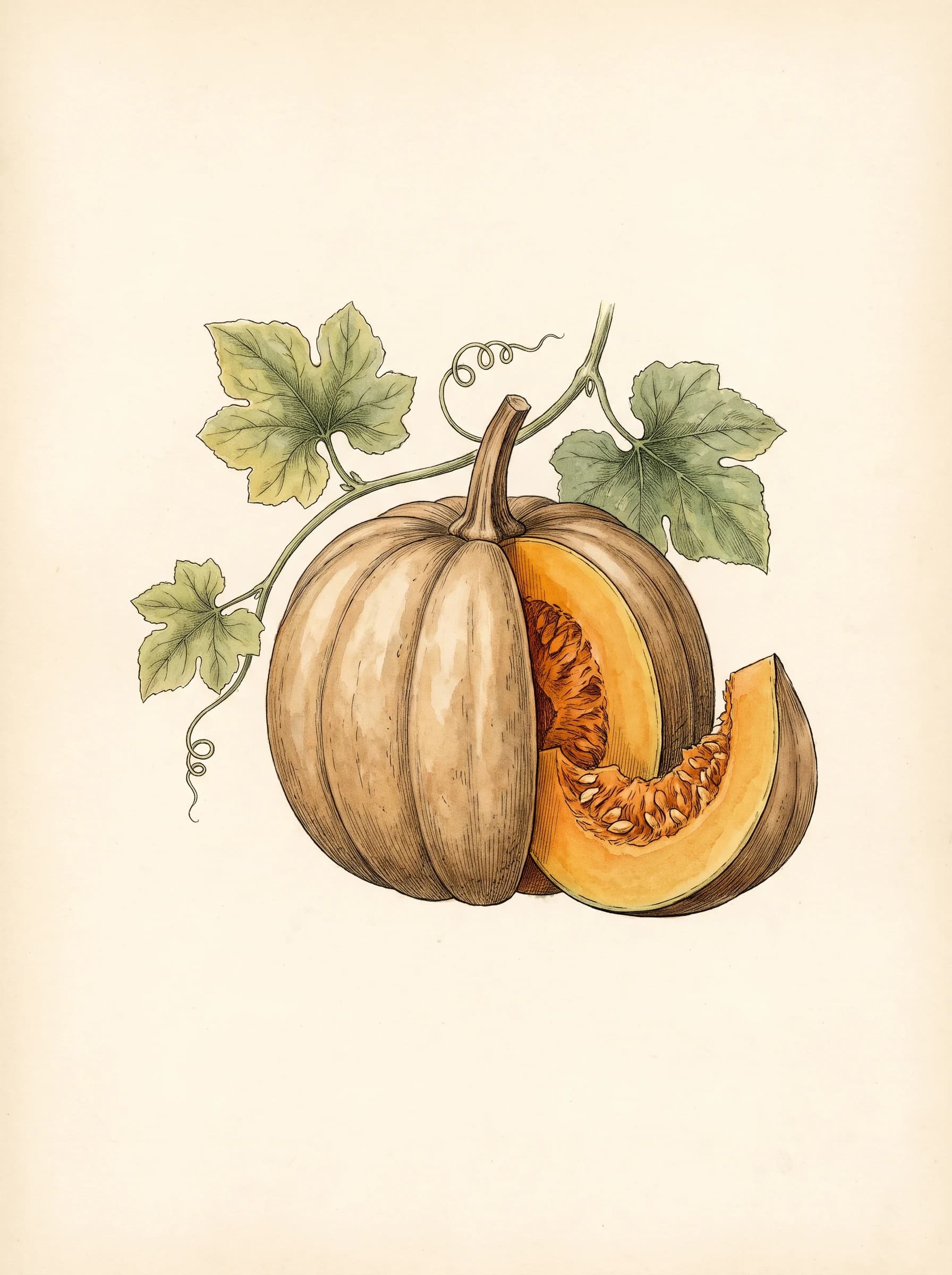
Rich and fleshy, in University of Illinois Extension’s description of baking pumpkins.
1 of 5 from sweet (1) to very tart (5). Rated 1 because no source describes acidity; Illinois Extension describes the baking pumpkin’s interior as “rich, fleshy, bright orange.”
- Origin
- Kentucky, early nineteenth century; accounts of its arrival in Illinois differ in detail. The Christian Science Monitor (1990) reports that the variety was brought by the Dickinson family from Kentucky in the early 1800s, and that Libby’s acquired the Dickinson canning plant and exclusive rights to the variety at Morton, Illinois, in 1929. An Illinois State Historical Society marker unveiled in Morton in 2026, as reported by WMBD, records that Elijah Dickinson moved from Kentucky to Eureka, Illinois, in 1835 and planted pumpkin seeds, and that his sons opened a canning factory there in 1898.
- Season
- Central Illinois: autumn. The Christian Science Monitor’s 1990 report found the Tazewell County Dickinson crop in the fields in early October, with Libby’s harvesting it with its own equipment.
- In the oven
- Dense and fleshy. Illinois Extension says a baking pumpkin is tan outside with a rich, fleshy, bright orange interior. The Christian Science Monitor reported in 1990 that pie pumpkins contain less water and more meat than jack-o’-lantern types and yield a tastier, prettier filling. Iowa State University Extension identifies Dickinson as the main source of commercial pumpkin puree.
The pumpkin in American canned pumpkin and most pumpkin pie is a tan, elongated Cucurbita moschata of the Dickinson type, grown under contract around Morton, Illinois. Illinois grows most of the nation’s processing pumpkins. Illinois made pumpkin pie its official state pie in 2015.
Iowa State University Extension places Dickinson in Cucurbita moschata, the species of butternut squash, and separates it from the Cucurbita pepo field pumpkins carved at Halloween. UGA Extension lists Dickinson Field among the moschata types. Iowa State notes that the word pumpkin describes a fruit’s appearance and use, not a botanical category.
The Christian Science Monitor reported in 1990 that Libby’s had canned pumpkin at Morton since 1929, when it bought the Dickinson canning plant and the rights to the variety, and that its Morton plant drew on about 4,000 acres in Tazewell and four adjacent counties. Shares of national production differ by source and year: Libby’s claimed more than 90 percent of the canned pumpkin market in 1990; Nestlé USA said in 2018 that more than 75 percent of United States canned pumpkin runs through Morton; Illinois Extension said in 2020 that Illinois grows around 90 percent of the nation’s canned pumpkins; and Mississippi State Extension said in 2022 that Illinois grows more than 95 percent of processing pumpkins.
Illinois Extension notes that a can of pumpkin pie filling bought anywhere in the country probably came from Illinois. In 2015 the General Assembly amended the State Designations Act to designate pumpkin pie the official state pie (5 ILCS 460/100), in a bill sponsored by Representative Keith Sommer; WCBU reported that the designation took effect in January 2016.
Sources
- Is canned pumpkin actually made from a mixture of butternut and other squashes?, Iowa State University Extension Yard and Garden
- Commercial Production and Management of Pumpkins and Gourds, UGA Extension Bulletin 1180
- Illinois Leads U.S. in Pumpkin Production, University of Illinois Extension (2020)
- Where Pumpkin Pies Come From, The Christian Science Monitor (October 31, 1990)
- Illinois growers produce holiday standby at ‘pumpkin capital’, Vegetable Growers News (2018)
- Interesting facts about fall-standard pumpkins (Gary Bachman), Mississippi State University Extension (2022)
- HB0208, 99th General Assembly, Illinois General Assembly (State Designations Act, state pie)
- Pumpkin Pie named the official pie of Illinois, WCBU Peoria (2015)
- State historical society recognized Morton as “Pumpkin Capital of the World”, WMBD (2026)