Fruits · root
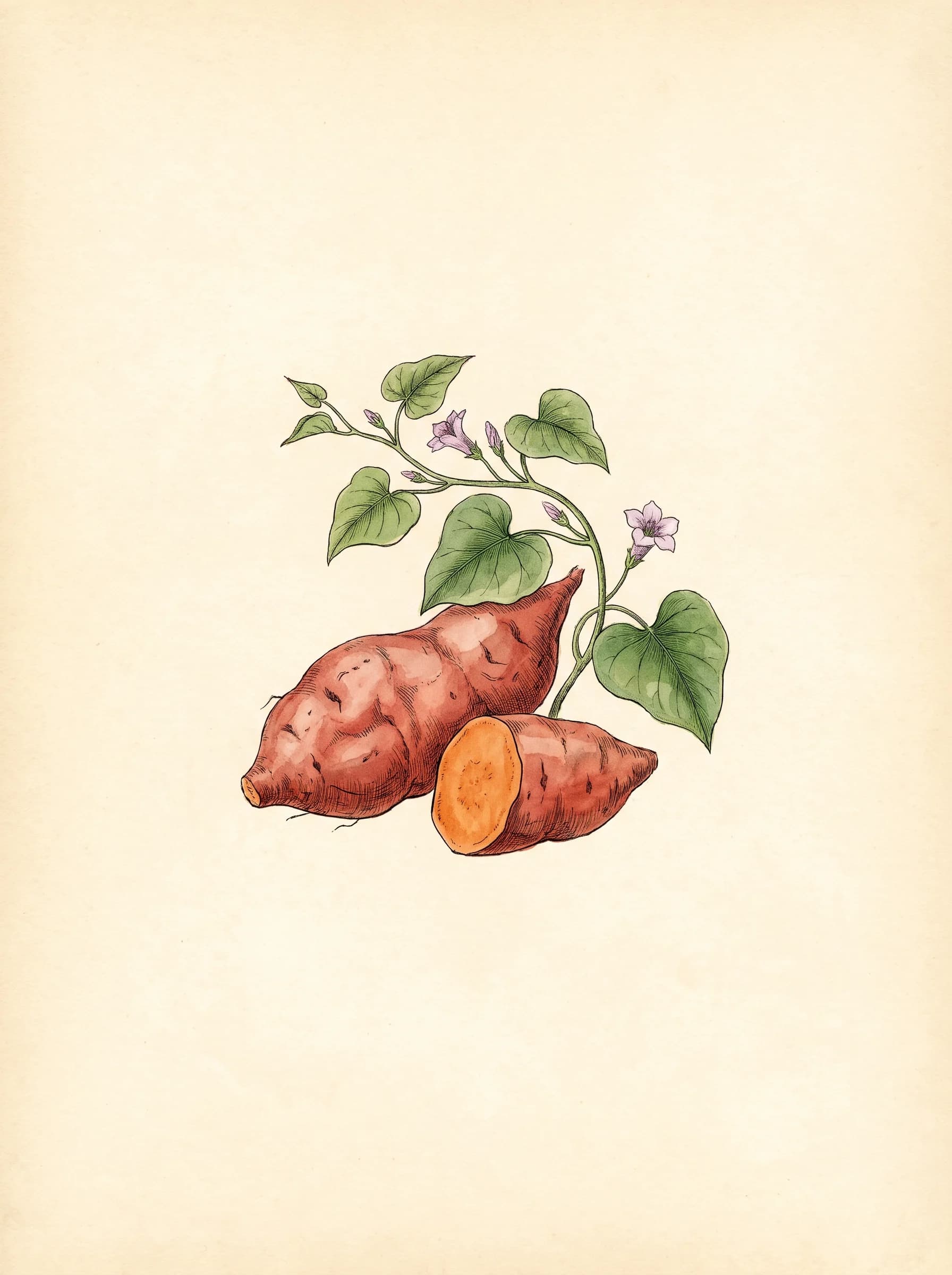
Sweet potato
Sweet and moist after cooking, in the USDA-ARS and NC State review’s description.
1 of 5 from sweet (1) to very tart (5). Rated from the USDA-ARS and NC State review’s description of the American orange-fleshed type as “sweet and moist-texture after cooking.”
- Origin
- Tropical America; the center of origin is unsettled. A USDA-ARS and NC State review notes that molecular studies place Central America as the region of most diversity and probable origin, that dried roots found in Peru have been radiocarbon dated to 8,000 to 10,000 years old (whether wild or domesticated is unknown), and that the crop was widely established in the New World tropics by about 2500 B.C.
- Season
- North Carolina: transplanted April through June, harvested late August through early November, about 120 days after transplanting (N.C. Cooperative Extension, Lee County).
- In the oven
- Cooked and mashed for pie; moist and sweet. The USDA-ARS review says the commercially popular American type is orange-fleshed, low in dry matter, and sweet and moist after cooking, and that curing after harvest increases moistness and sweetness. Washington State University Extension notes that curing improves flavor as starch is converted to sugar.
The sweet potato is a storage root of the morning glory family from tropical America. North Carolina is the leading producer in the United States, and the sweet potato is its state vegetable. Processors turn the orange-fleshed American type into pie filling, among other products.
Truong, Avula, Pecota and Yencho’s review for USDA-ARS and NC State sets out what is known of the crop’s origin: Central America holds the most genetic diversity, Peruvian remains date back 8,000 to 10,000 years, and the plant reached Polynesia before Europeans arrived. The same review notes that the American orange-fleshed sweet potato is often called a yam, though it is unrelated to the true tropical yams of the genus Dioscorea; the USDA requires packages labeled yam to carry the word sweetpotato. N.C. Cooperative Extension notes that sweet potatoes belong to the morning glory family, not the nightshade family of the Irish potato.
NC State’s breeding program, led by Craig Yencho and Ken Pecota, released Covington in 2005 to replace Beauregard, a Louisiana-bred variety that had become unreliable in North Carolina fields. AUTM reports that Covington came to account for 90 percent of the state’s crop; NC State counts it as one factor in the state’s rise, with disease research, clean planting stock and improved storage. Figures for North Carolina’s national share differ: N.C. Cooperative Extension’s Lee County office says more than 40 percent of the national supply, and AUTM says nearly half. The North Carolina SweetPotato Commission reported about 94,000 registered acres, against about 40,000 twenty years earlier.
After harvest the roots are cured for four to seven days at 84 to 91°F (29 to 33°C) and high humidity, which heals wounds, allows up to twelve months of storage, and makes the flesh moister and sweeter. NC State’s Dee Shore recalls sweetpotato pies at Christmas and Thanksgiving, and N.C. Cooperative Extension’s Lee County office ties the root to Thanksgiving’s sweet potato pie. AUTM notes that processors also make pie filling from it.
Sources
- Sweetpotato Production, Processing, and Nutritional Quality (V. D. Truong, R. Y. Avula, K. V. Pecota and G. C. Yencho), USDA-ARS and NC State University
- North Carolina Sweet Potatoes, N.C. Cooperative Extension, Lee County Center (2017)
- Sweet Success With Sweetpotatoes, Farms, Food and You, NC State College of Agriculture and Life Sciences
- Covington Sweetpotato, Better World Project, AUTM
- Sweetpotato Curing and Storage, Washington State University Vegetable Research and Extension