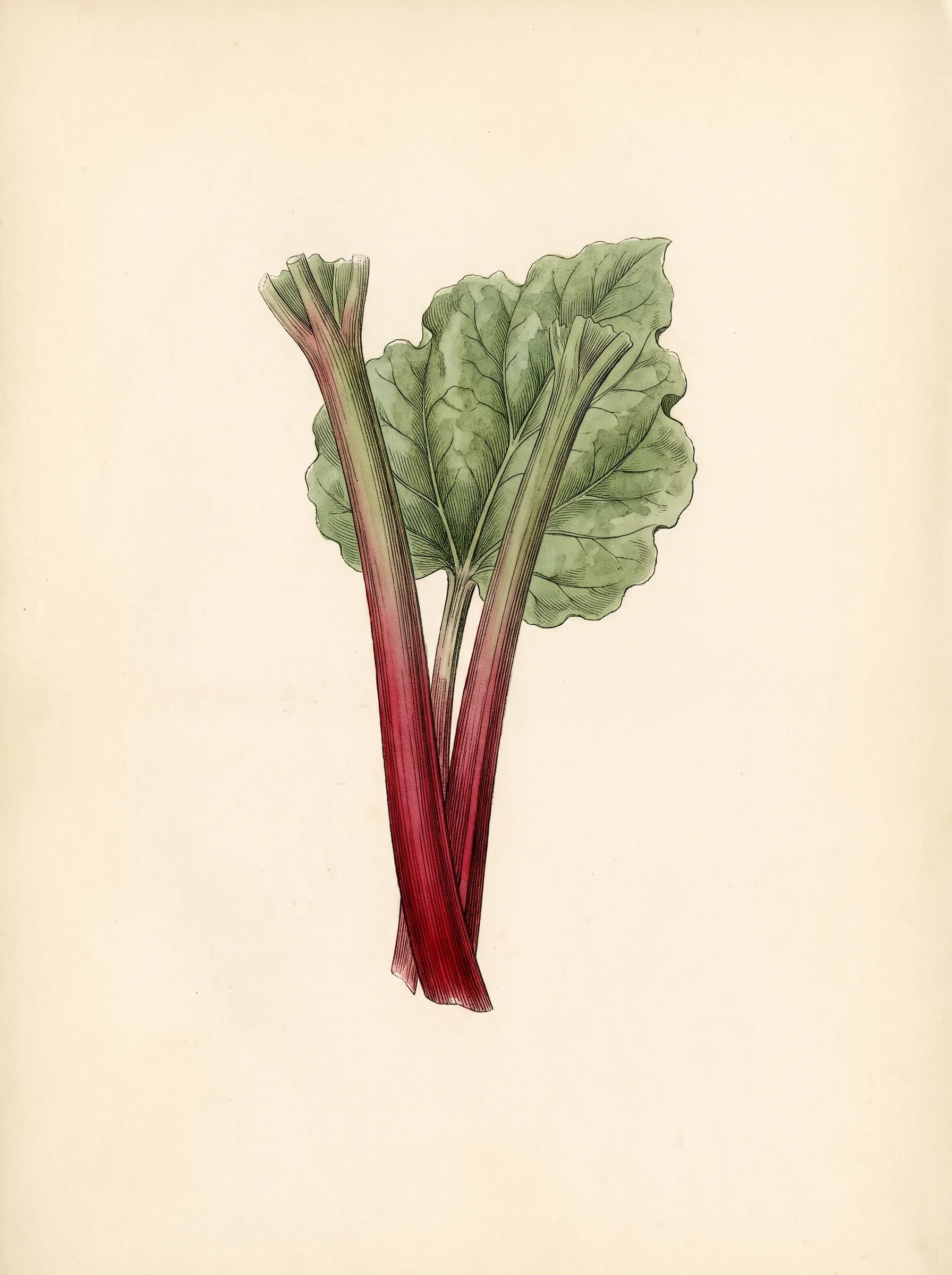
Fruits · stalk
Rhubarb
Tart, with a sour crunch, in North Dakota State University Extension’s description.
5 of 5 from sweet (1) to very tart (5). Rated from South Dakota State University Extension’s “tart leafstalks” and NDSU Extension’s “sour crunch.”
- Origin
- China, where a rhubarb was used as medicine as early as about 2700 B.C. (North Dakota State University Extension). NDSU Extension says other rhubarbs came into use as food in Europe by the late 1700s, and that around 1800 a Maine gardener introduced it to America.
- Season
- Spring into early summer, region by source: through the end of June, beginning in spring, at South Dakota State University; best in June, per North Dakota State University; generally starting in mid-June, per the University of Connecticut.
- In the oven
- Very juicy and low in pectin. King Arthur Baking’s thickener guide groups strawberry and rhubarb as the juiciest fruits with the least pectin, requiring the most thickener. Only the stalks are used; the leaves contain toxic levels of oxalic acid.
Rhubarb is a cool-season perennial grown for its tart leafstalks, botanically a vegetable and used as a fruit. Its common name in America is pie plant. Its leaves are poisonous.
NDSU Extension traces medicinal use of rhubarb to ancient China, around 2700 B.C., where an early variety treated digestive and other ailments. Food rhubarbs came into use in Europe by the late 1700s, and around 1800 a Maine gardener obtained seed or roots and introduced the plant in America. NDSU notes the plant’s other name, pie plant.
Rhubarb is an herbaceous perennial in the Polygonaceae family, grown from rhizomes. Extension services advise no harvest in the first year and a light harvest in the second, with a full harvest of eight to ten weeks afterward; stalks are pulled and twisted from the crown, not cut. The leaves contain toxic oxalic acid. South Dakota State and the University of Connecticut warn that after a hard freeze oxalic acid can move into the stalks, which should then be discarded. NDSU adds that, contrary to popular belief, the plant does not become toxic later in summer, though the stalks turn stringy and tough.
SDSU Extension lists pie fillings, crisps, sauces and wine among rhubarb’s uses, and NDSU notes that it pairs well with strawberries in many recipes. King Arthur Baking’s guide treats strawberry and rhubarb together as the fillings that need the most thickener. The University of Connecticut notes that all rhubarb cultivars are hybrids and do not come true from seed.