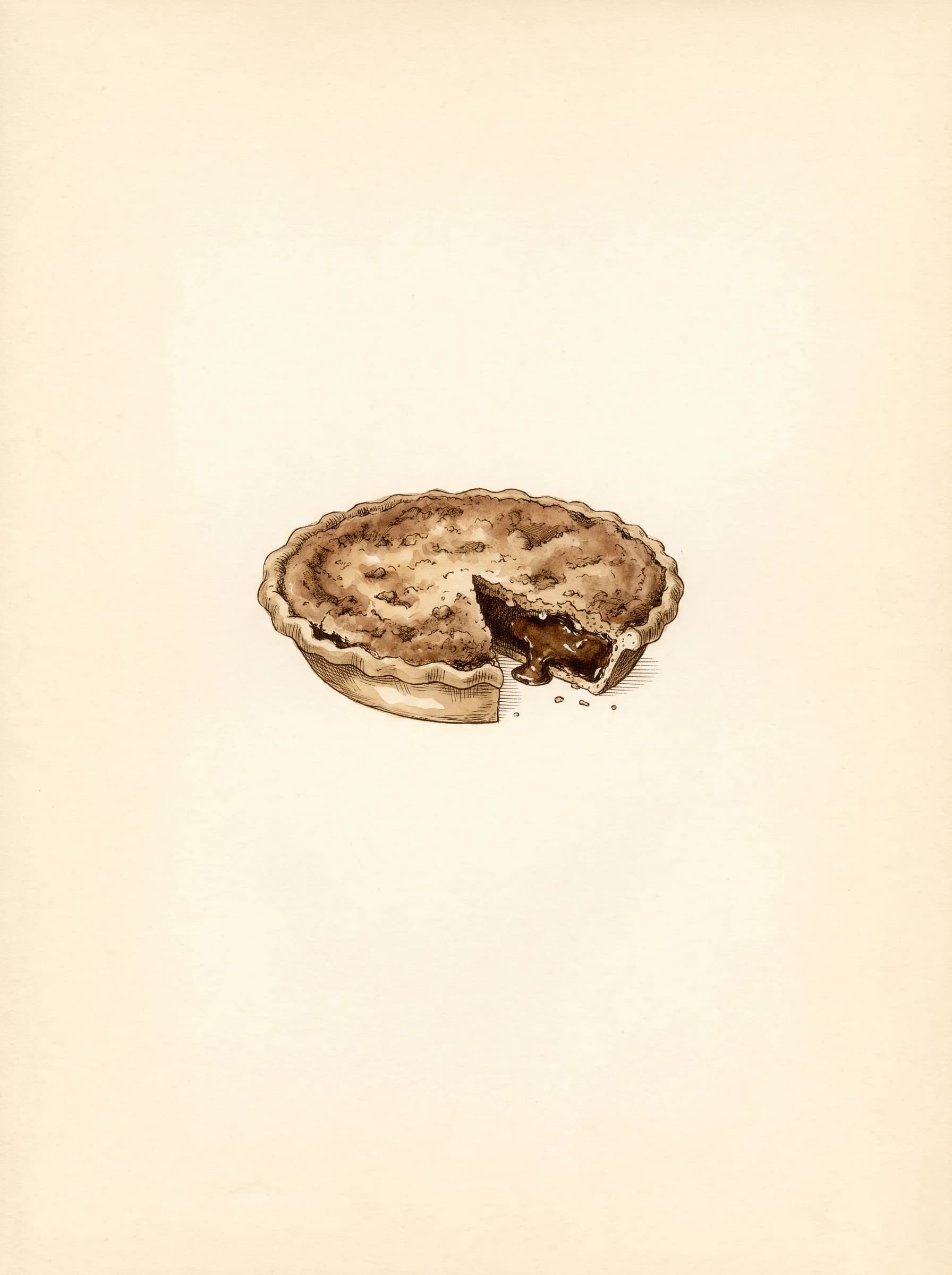
Shoofly pie is a molasses filling baked under a crumb topping in a single crust. The food historian William Woys Weaver traces it to a Philadelphia molasses cake of 1876. It has been a Pennsylvania Dutch breakfast pie since at least the early twentieth century, and the source of its name is still argued.
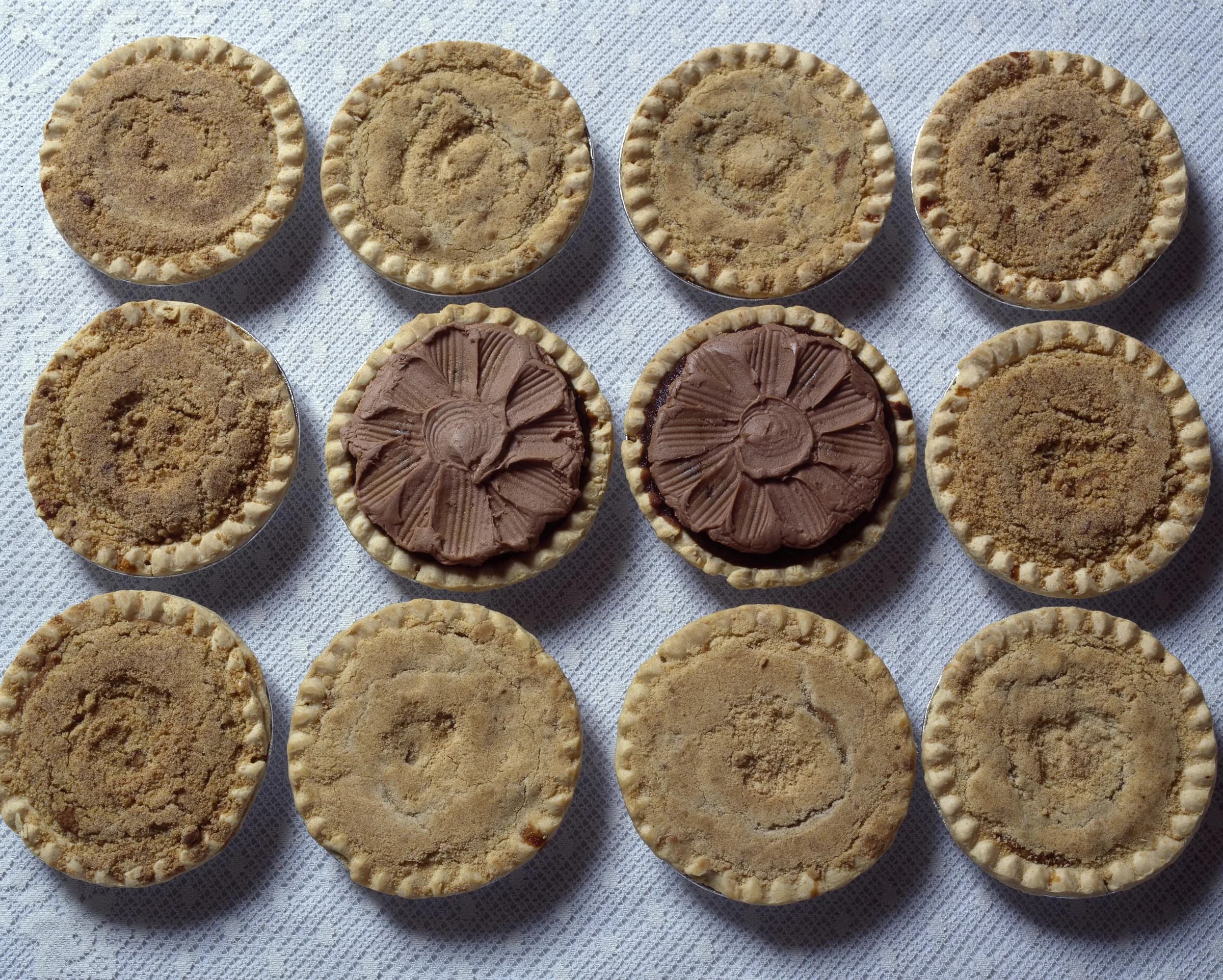
Shoofly pie is a molasses crumb cake baked in a pie shell. A liquid of molasses, hot water and baking soda goes into the crust, and crumbs of flour, brown sugar and fat go over it. Two forms are made in Pennsylvania Dutch country. The dry-bottom pie bakes into a cake-like texture throughout. The wet-bottom pie keeps a sticky, custard-like layer above the crust, a cake layer in the middle and crumbs on top.
William Woys Weaver, a Pennsylvania Dutch culinary historian and author of As American as Shoofly Pie (2013), describes the pie as an old-style molasses crumb cake baked in an Anglo-American pie shell. In his account it began as a Centennial Cake made in Philadelphia in 1876 for the Centennial Exhibition, and it came out of the 1870s “baking-powder revolution” in Pennsylvania Dutch cooking. A Pomeroy Foundation marker in Telford, dated 2025, states that the pie is believed to have developed from that centennial cake and was a Pennsylvania Dutch tradition by 1920.
The name has three explanations in circulation. The most familiar holds that the sweet filling drew flies as it cooled. A second ties it to a Philadelphia product called Shoofly Molasses, and Fox News, reporting Weaver’s views, calls the claim that the 1876 cakes used that molasses unproven. Weaver’s own explanation is that Shoofly was a popular local boxing mule whose name was put on foods. Wikipedia’s survey links the mule, the molasses brand and the song “Shoo Fly, Don’t Bother Me” in a single chain.
Wikipedia states that the name first appeared in print after the First World War. An earlier printing exists. Edith M. Thomas’s Mary at the Farm, published in 1915 and set in Bucks County, gives a recipe headed “Pebble Dash” or Shoo-Fly Pie, attributed to Aunt Sarah. The same book notes that crumb pies, with or without molasses, were very popular at breakfast. It also hedges on the category: “They are not really pies, they resemble cakes.”
The map assigns Pennsylvania to this style on the documentary record of Pennsylvania Dutch cooking: the 1915 cookbook, the 2025 marker and Weaver’s history. The assignment does not rest on a state designation, and none is cited here.
Sources
- Edith M. Thomas, Mary at the Farm, and Book of Recipes Compiled During Her Visit Among the “Pennsylvania Germans” (1915), Project Gutenberg
- Shoofly Pie historical marker, Telford, PA, William G. Pomeroy Foundation (2025)
- Shoofly pie was born in the USA, Fox News (quoting William Woys Weaver)
- Shoofly Pie: A Gooey, Delicious Pennsylvania Dutch Classic, America’s Test Kitchen (2023)
- Shoofly pie, Wikipedia