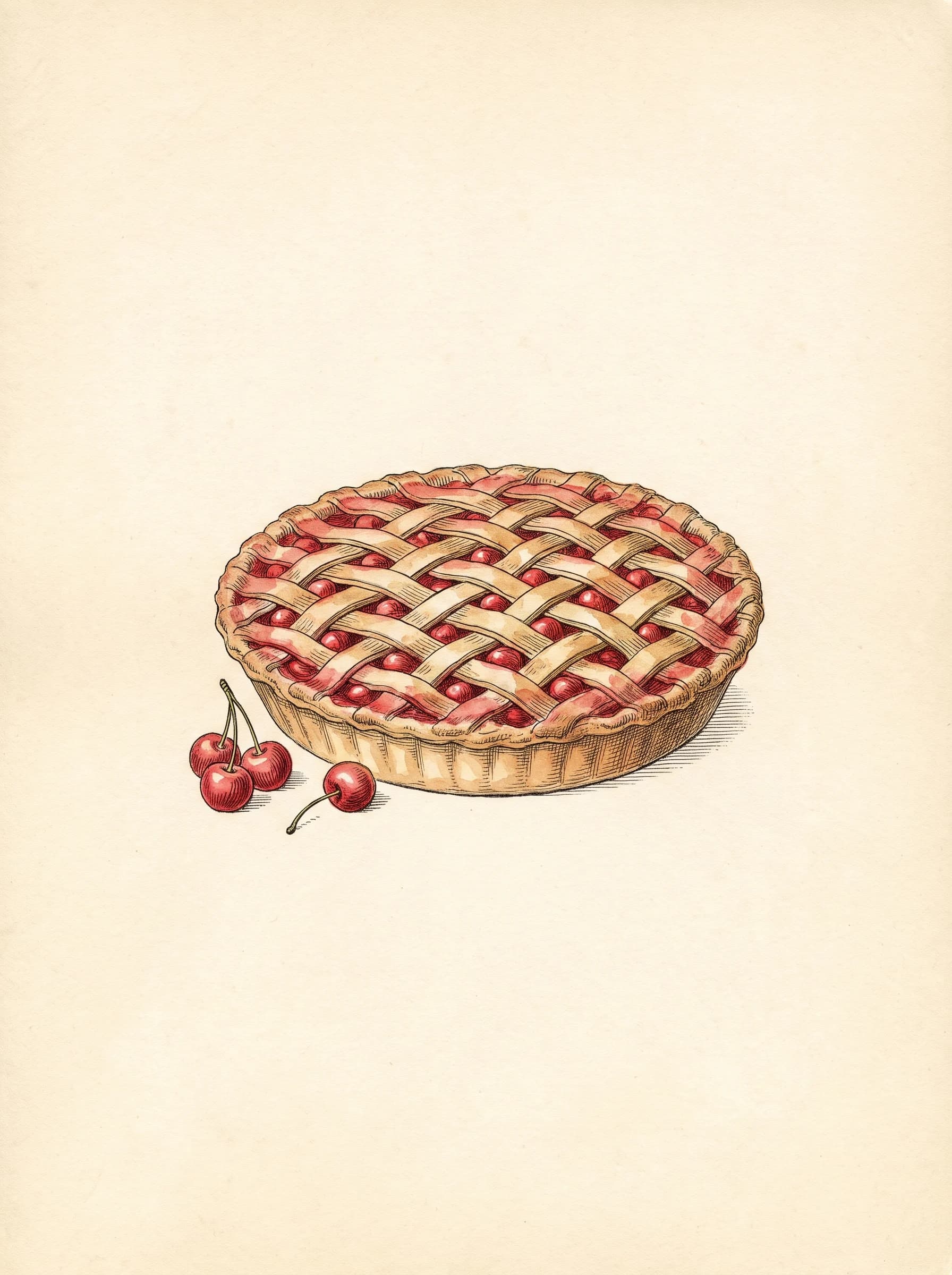
Tart cherry pie is a double-crust or lattice pie of tart cherries, chiefly the Montmorency variety. Michigan grows about two-thirds of the nation’s tart cherries, and the pie’s home ground is the Grand Traverse region, where the National Cherry Festival crowned its first Cherry Queen in 1925.
The pie is filled with pitted tart, or sour, cherries, sweetened and thickened with flour, cornstarch or tapioca. It is covered with a top crust or a lattice. Almond extract and lemon juice are common seasonings.
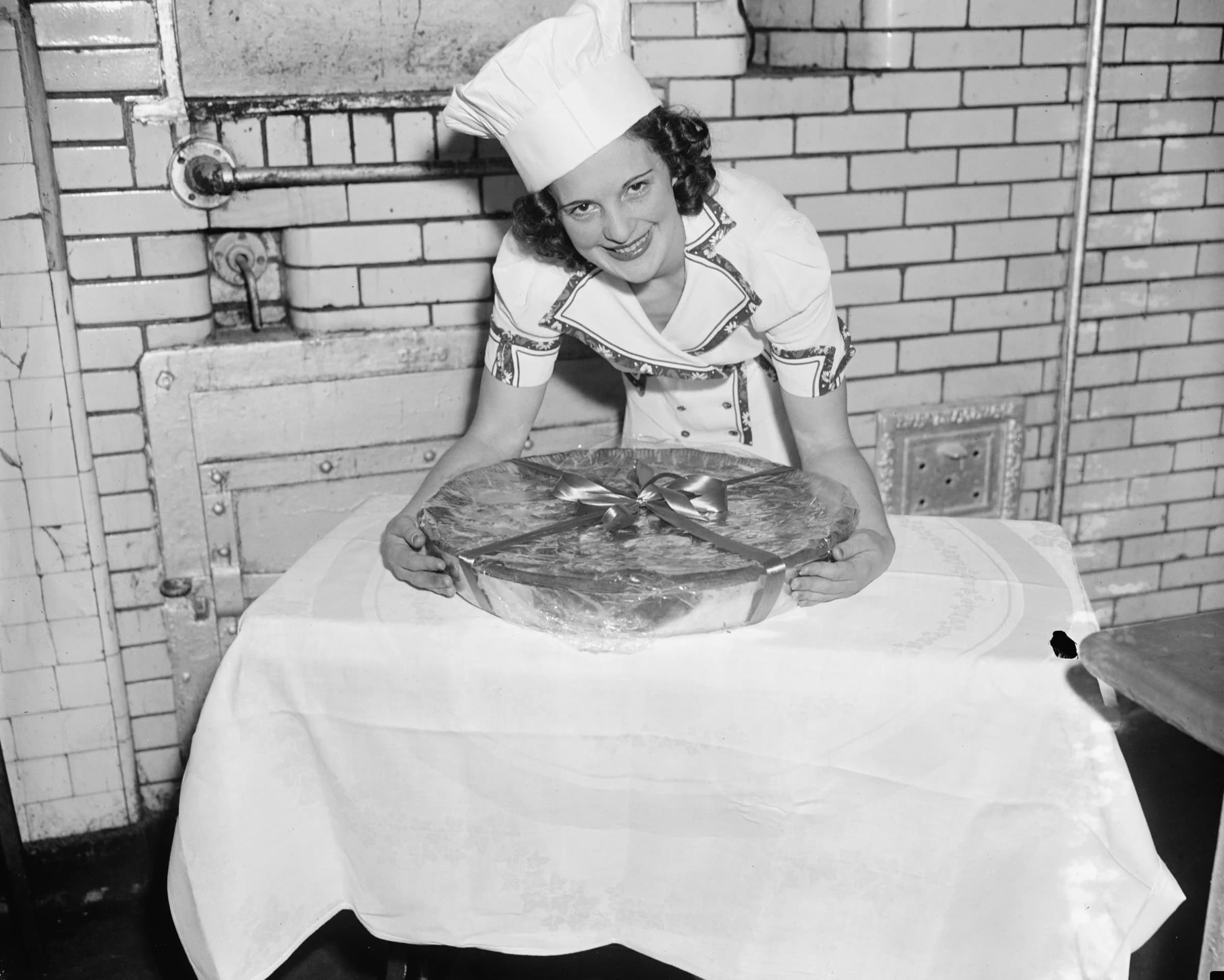
According to the National Cherry Festival, the Presbyterian missionary Peter Dougherty planted cherry trees on Old Mission Peninsula, near Traverse City, in 1852. The first commercial tart cherry orchards in Michigan were planted in 1893 on Ridgewood Farm near his original plantings, and by the early 1900s orchards ran along Lake Michigan from Benton Harbor to Elk Rapids. Growers held informal blessing-of-the-blossoms ceremonies from about 1910, and the first Cherry Queen was crowned in 1925. In 1926 Hawkins Bakery in Traverse City baked a cherry pie three feet across for President Calvin Coolidge.
Michigan grows most of the nation’s tart cherries. USDA figures put Michigan’s 2023 tart cherry production at 133.0 million pounds of a national 200.2 million, about two-thirds. The 2024 forecast was 182.0 million pounds for Michigan and 222.0 million nationally. NASS’s 2023 table of selected tart cherry states lists Michigan, Utah, at 32.7 million pounds, and Wisconsin, at 10.0 million. Together the three account for 175.7 million of the national 200.2 million pounds; the other 24.5 million pounds came from states that table does not list separately. The industry operates under a federal marketing order administered by the Cherry Industry Administrative Board.
The Cherry Hut in Beulah opened in 1922 as a roadside pie stand on the north shore of Crystal Lake, selling pies made from the Kraker family’s own orchard. It moved to its present site on US-31 in 1937. Its double-crust pie is made with lard in the crust, and in December 2025 it was the only Michigan entry on a New York Times list of the best restaurant desserts in the country.
Michigan is assigned to this style as the leading producer. Utah and Wisconsin are assigned as the other two states in NASS’s 2023 table of selected tart cherry states, and Utah’s code names the cherry its state fruit. No legislature has designated cherry pie a state pie in the sources cited.
Sources
- History of Cherries, National Cherry Festival
- Festival History, National Cherry Festival
- Michigan Fruit Production 2023, USDA NASS Great Lakes Region (NR-24-26, 2024)
- 2024 Michigan Cherry Production Forecast, USDA NASS Great Lakes Region (NR-24-33, 2024)
- Wisconsin Ag News – Tart Cherries, USDA NASS (2024)
- Utah Code 63G-1-601, State symbols, Utah State Legislature
- About the Industry, U.S. Tart Cherries
- The Cherry Hut, TASTE
- The Cherry Hut’s iconic pie makes New York Times’ ‘Best Restaurant Desserts’ list, 9&10 News (2025)
- Michigan Tart Cherry Pie, Taste the Local Difference (from the 2021 Local Food Guide for Michigan)